🚚 Free shipping · 90-night money-back guarantee

Awake at 3 a.m.? MIT research suggests you’ve been taking too much melatonin.
Researchers testing adults over 50 found a dose 10× smaller than the standard 3 mg worked as well or better, without lingering into the next day. Here’s what that means for the 3 a.m. wake-up.
The 0.3 mg discovery: why less melatonin worked better for adults over 50.
Most melatonin on the shelf is 3 to 10 mg. The dose that held up in the research was 0.3. Here’s why the smaller number matters at 3 a.m.
 0.3 mg, not 10 mg
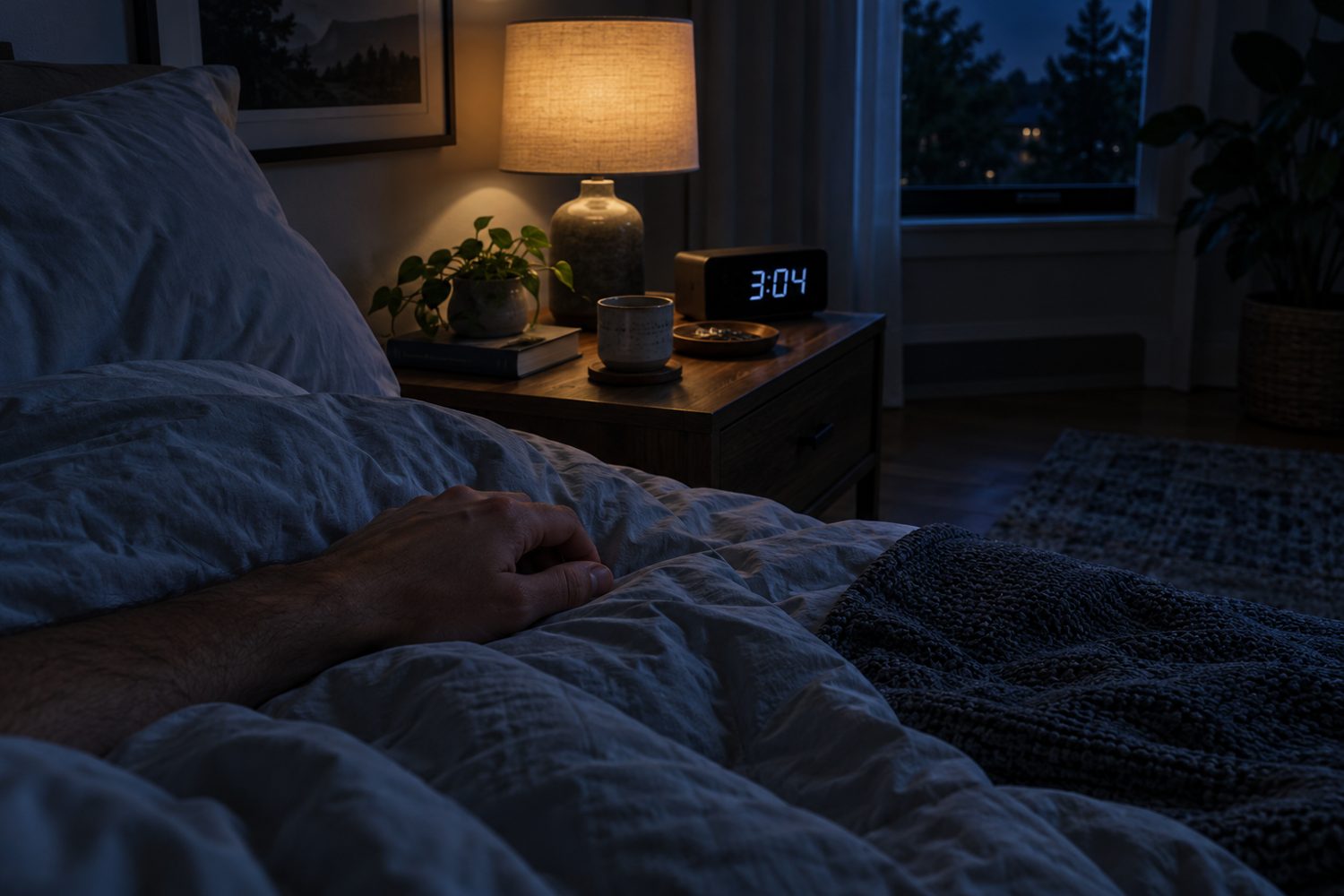
Falling asleep was never the problem. You read a few pages, turn off the lamp, and you’re gone by 10:45.
It’s 3:04 that gets you. The house is dark, the ceiling fan is turning, and you are completely awake. You get up for the bathroom, come back, and lie there listening for the first birds.
You did what the pharmacist suggested: melatonin, ten milligrams. You still woke at three. And the next afternoon you nodded off in your chair halfway through the news.
You fall asleep fine. The middle of the night is the hard part, and a small 0.3 mg dose is built around it.
This chew is built for one thing: the middle of the night. If that isn’t you, you probably don’t need it.
You fall asleep in the chair at 2 p.m., then lie awake again that night. The pattern feeds itself.
Lunch with friends, the grandchildren’s game, the walk you used to love. Tired is a reason to stay home.
Helped you fall asleep, which you could already do. At 3 a.m. it didn’t help, and the next day felt heavy. That clue matters.
Alcohol makes you drowsy first, then tends to break up the second half of the night, exactly when you’re already waking.
It passes the time. It doesn’t change why you woke up.
Your body makes less melatonin as you get older. The sleep aisle answered with more: 3, 5 and 10 mg, because a bigger number looks stronger.
But your body never made anything close to 10 mg. At those amounts melatonin can stay in the blood well into the next day, which is the heavy, foggy afternoon you noticed.
And the label may not even be accurate: a 2023 study in JAMA found melatonin gummies held anywhere from 74% to 347% of the amount printed on the bottle.
The fix is the right amount: close to what your body made on its own, so the signal fits the night and fades by morning.
Then give the body a calmer place to settle into: a compound from chamomile that has been studied for relaxation, magnesium, and an amino acid from tea leaves that helps a busy head quiet down.

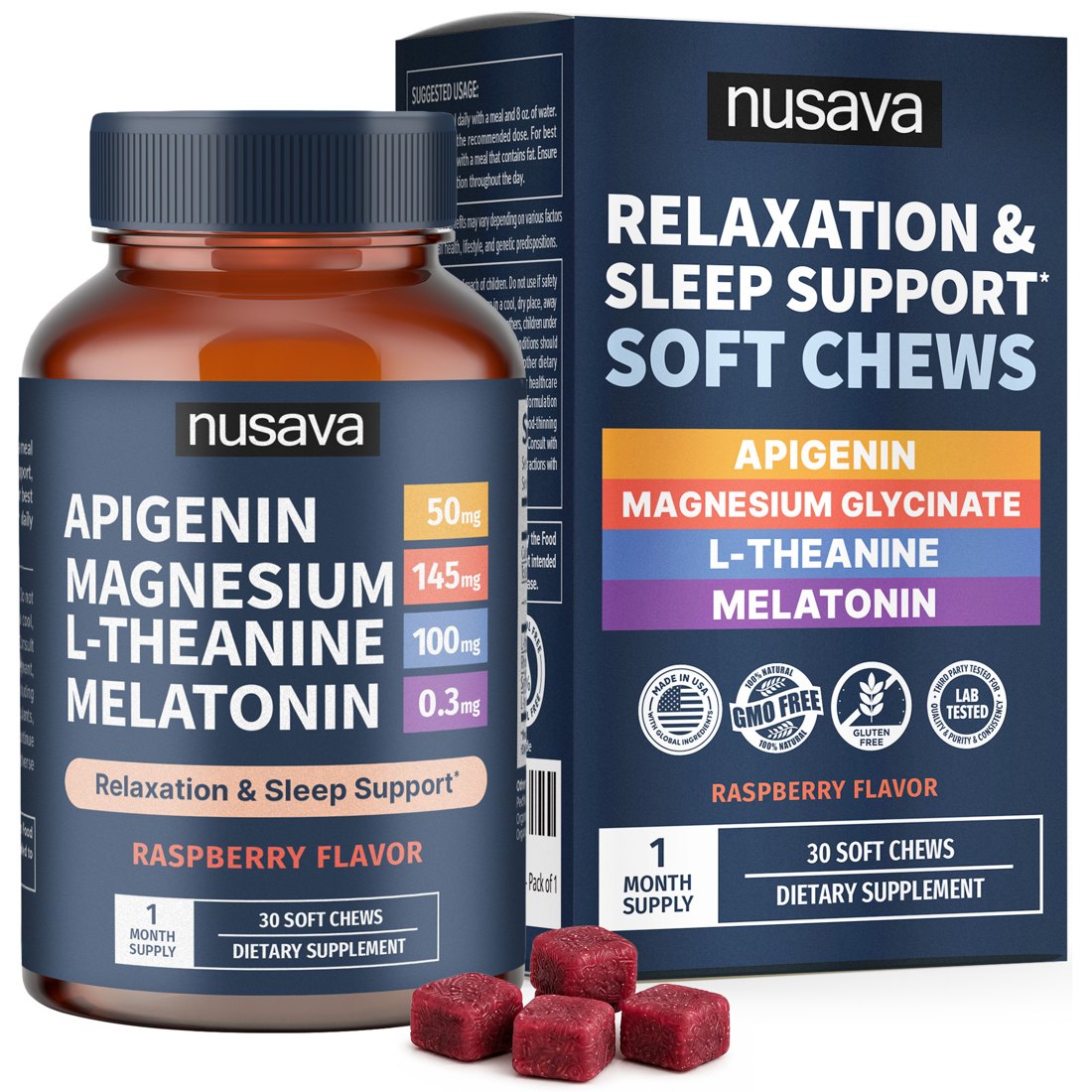
Nusava’s night chew puts that approach into one raspberry soft chew, taken 30 to 60 minutes before bed. No pill to swallow.
0.3 mg of melatonin. 50 mg of apigenin, the chamomile compound. 145 mg of magnesium glycinate. 100 mg of L-theanine. Together they support relaxation as you wind down.
Third-party tested, GMO free and gluten free. 30 chews, 30 nights, one bottle.
| Ingredient | Typical melatonin gummy | Nusava night chew |
|---|---|---|
| Melatonin | 3–10 mg | 0.3 mg |
| Apigenin (from chamomile) | — | 50 mg |
| Magnesium glycinate | — | 145 mg |
| L-theanine | — | 100 mg |
In 2001 a team at the Massachusetts Institute of Technology studied adults over 50 who had trouble sleeping. They compared a 0.3 mg dose of melatonin with a 3 mg dose.
The small dose worked as well as, or better than, the large one for sleep. The large dose was the one more likely to leave melatonin in the blood the next day.
Twenty-two years later, researchers testing gummies off the shelf found the labels themselves were unreliable. The smaller, clearly measured dose is the one that held up.
You fall asleep the way you always have. No heavy feeling the next morning.
The 3 a.m. stretch tends to get shorter, and settling back down gets easier.
More nights where the next thing you notice is morning. A good reason to give it a full month.

It contains 0.3 mg of melatonin, apigenin, magnesium and L-theanine. If you take prescription medication, show your doctor the label first. We include a printable label summary for exactly that.
It is not a sedative and contains no sleeping-pill ingredients. You can take it every night and stop whenever you like.
0.3 mg is close to what the body makes on its own, which is why it’s far less likely to linger than 5 or 10 mg.
It’s a soft raspberry chew. Nothing to swallow whole.
You have 90 nights to decide. If it’s not for you, you get your money back.
Save 20%30 soft chews · one a night · raspberry
Lights out at 10:30, as usual. And then, for once, nothing until the alarm. No ceiling fan at 3 a.m., no doze in the chair at 2 p.m.
All it took was the right amount.
P.S. If 10 mg didn’t keep you asleep, that doesn’t mean melatonin can’t help. Research suggests the dose was the problem. The 0.3 mg chew is the smaller, measured dose, with 90 nights to try it.