🚚 Free shipping · 90-night money-back guarantee

You logged off at 6. So why is your brain still in a meeting at 11?
Your brain needs a clear signal that the workday is over, and your evening never sends one. Here’s the 30-minute off-ramp that gives it one.
There’s a name for staying up until midnight to win back your evening. Here’s how to stop.
It’s called revenge bedtime procrastination, and it’s why the alarm feels brutal. What helps is an evening with a real ending.
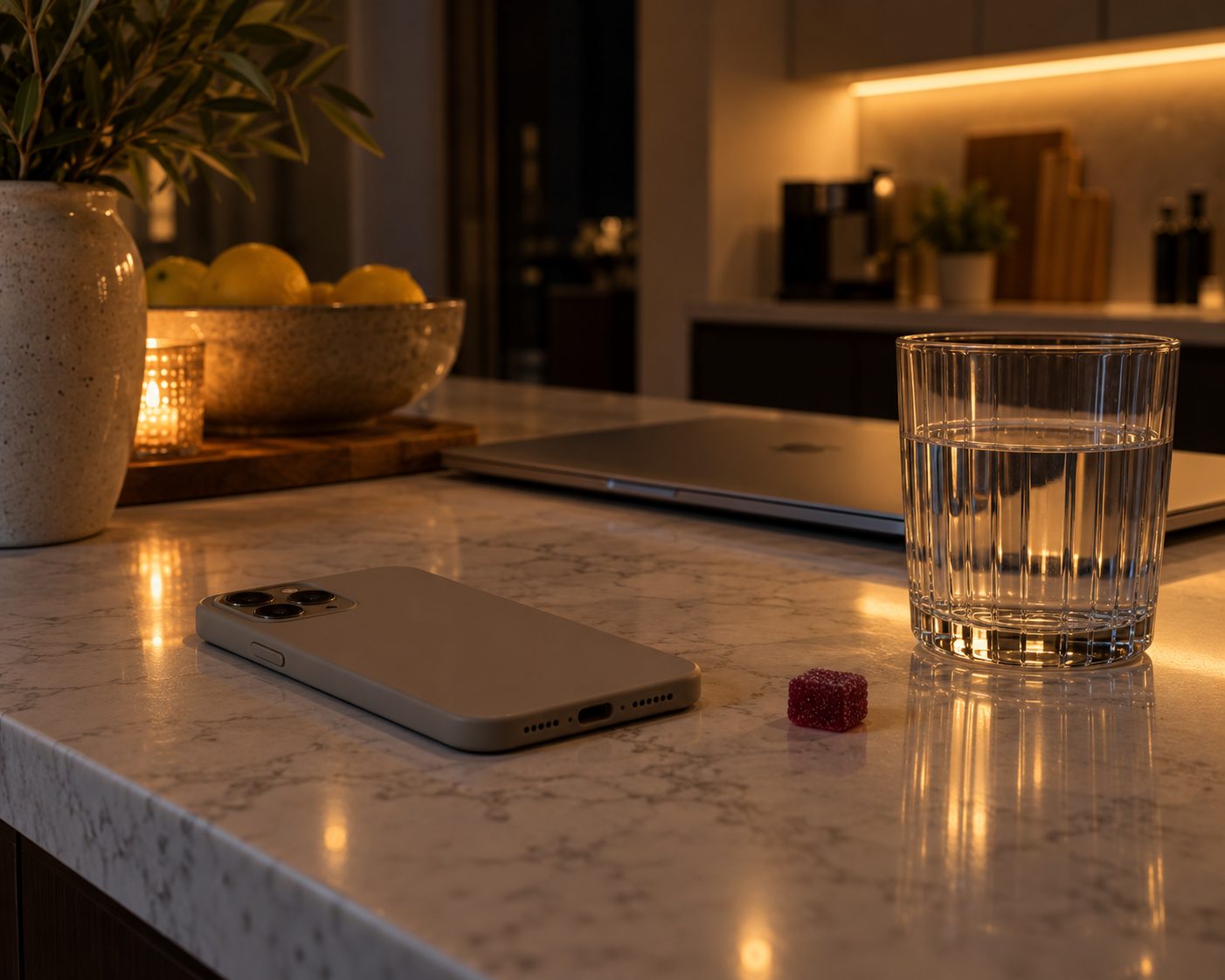 30-min off-ramp
Since then: four Slack replies, one email starred for the morning, 40 minutes of videos you won’t remember, because it’s the only time all day that was yours.
Now you’re in bed, phone face down, and your brain is drafting a reply to your manager.
There’s a name for this. Revenge bedtime procrastination.

That’s why your brain is still at work at 11. Here’s how to give it a clear signal that the day is over.
If work stays at work, you probably don’t need this.
Camera on, brain still loading.
And the crash by 3.
Instead of living.
Dismissed by 9 p.m. Every night.
The streak died in week two.
Willpower at 11 p.m. is the weakest it gets all day.
Work used to end with a commute. Now the laptop closes and nothing marks the change. Your brain stays in alert mode, and the scrolling is you trying to get your evening back.
Your evening simply has no off-ramp.
A fixed cue at the same time every night tells your brain the workday is done. That part is free, and it helps.
What it can’t do is calm a body still running on the day. You can close the laptop and still lie there wired, heart a little fast, head replaying the last call. Deciding to relax doesn’t switch that off.
That’s the part the chew is for. L-theanine, an amino acid from tea leaves, is linked in research to calmer alpha brain waves within about an hour, with apigenin and magnesium to help the body settle. Take it at the start of your off-ramp, so it’s working by the time you reach the pillow.

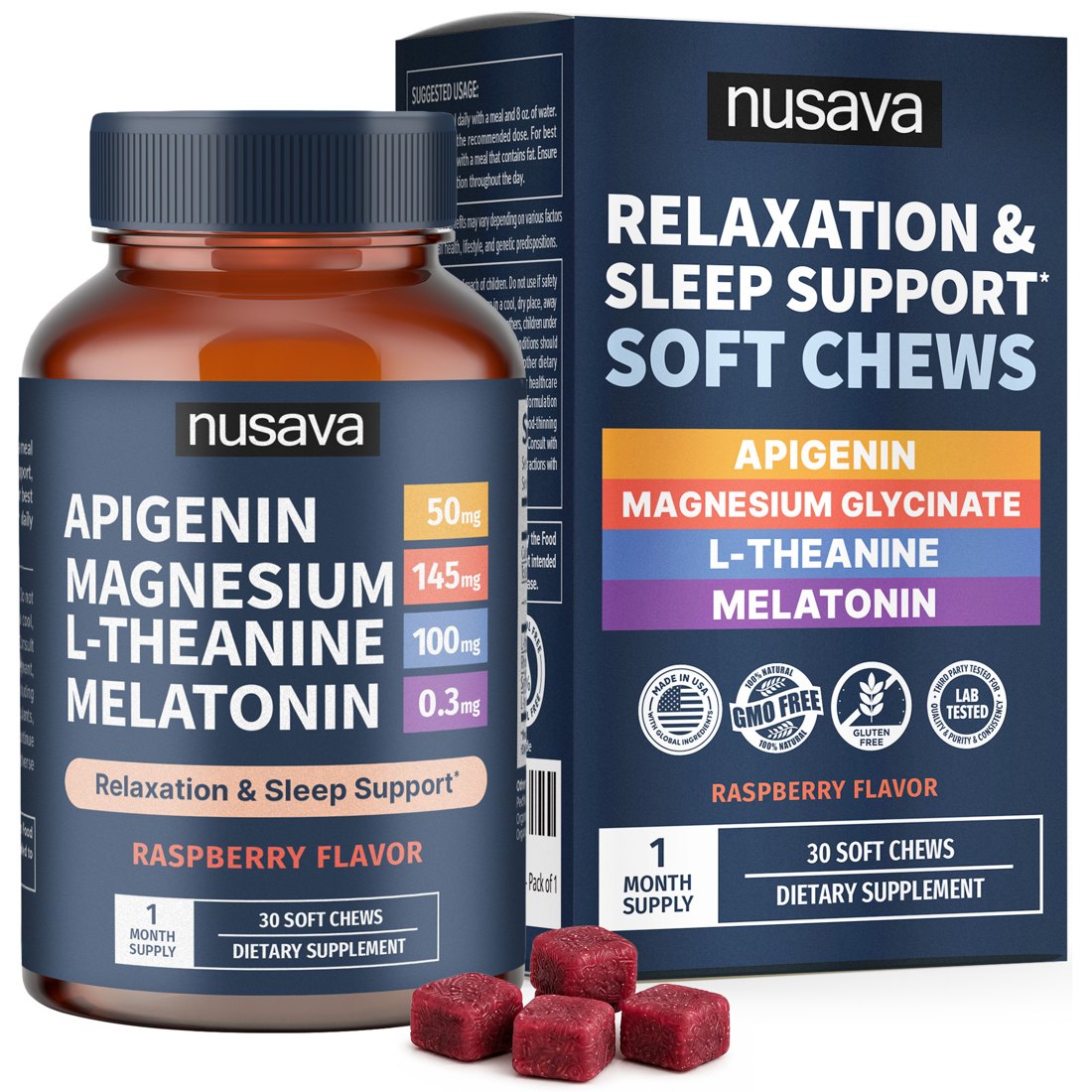
One raspberry soft chew: 100 mg L-theanine, 50 mg apigenin, 145 mg magnesium glycinate and 0.3 mg melatonin. Supports relaxation as you wind down. No sedatives, and the melatonin dose is small.
| Ingredient | Typical melatonin gummy | Nusava night chew |
|---|---|---|
| Melatonin | 3–10 mg | 0.3 mg |
| Apigenin (from chamomile) | — | 50 mg |
| Magnesium glycinate | — | 145 mg |
| L-theanine | — | 100 mg |
In a 2008 study, L-theanine increased alpha brain-wave activity, the pattern linked to calm, relaxed alertness.
The researchers who named “bedtime procrastination” linked it to self-regulation: by the end of a long day it gets harder to stop what you’re doing and go to bed. That’s why a fixed cue works better than willpower at 11 p.m.
A clear end to the day.
Less late scrolling.
The cue becomes automatic.
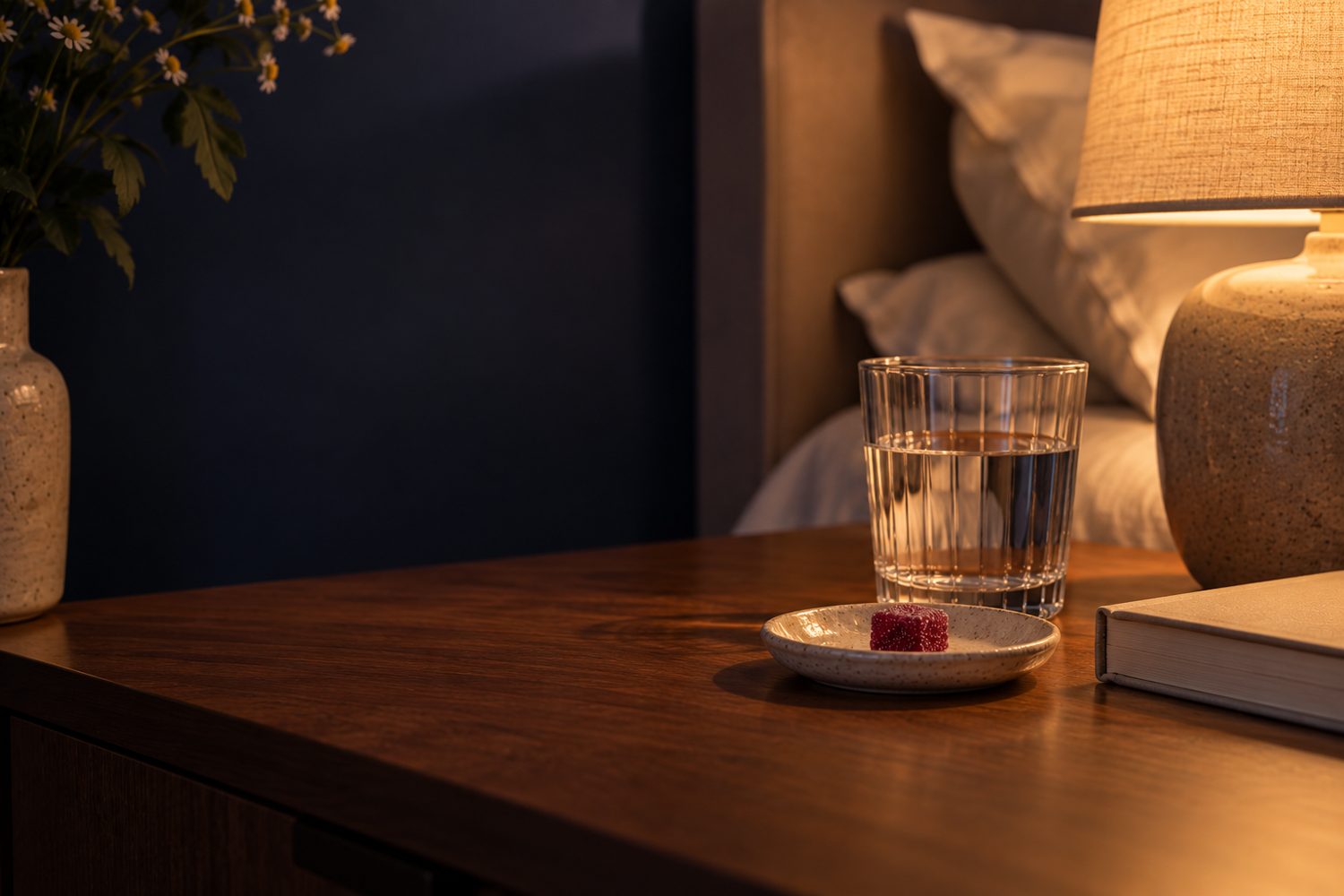
It’s taken in the evening, and the melatonin is only 0.3 mg, close to what the body makes.
Yes. Take it at the start of your off-ramp, 30–60 minutes before bed.
No. The main ingredients are L-theanine, apigenin and magnesium. The melatonin is 0.3 mg.
You can, and it will help your head. It won’t calm a body that’s still wired from the day. That’s what the L-theanine, apigenin and magnesium are there for, which is why the two work together.
90 nights to decide, or your money back.
Save 20%30 soft chews · one a night · raspberry
Laptop closed at 6:30. Chew at 10. Phone on the charger in the kitchen. Asleep before you finish the thought about your manager.
P.S. Your evening has no off-ramp. Build one, and give it 90 nights.