🚚 Free shipping · 90-night money-back guarantee

The real reason women over 40 wake at 2 a.m. (It’s not stress.)
It’s a change that starts in your 40s, and nobody warns you about it. Here’s what’s really waking you, and what helps you settle back to sleep.
If you wake at 2 a.m. and can’t get back to sleep, your evening glass of wine may be part of the reason.
That glass helps you fall asleep, then can wake you hours later. Here’s why it hits harder in your 40s, and an easier way to unwind.
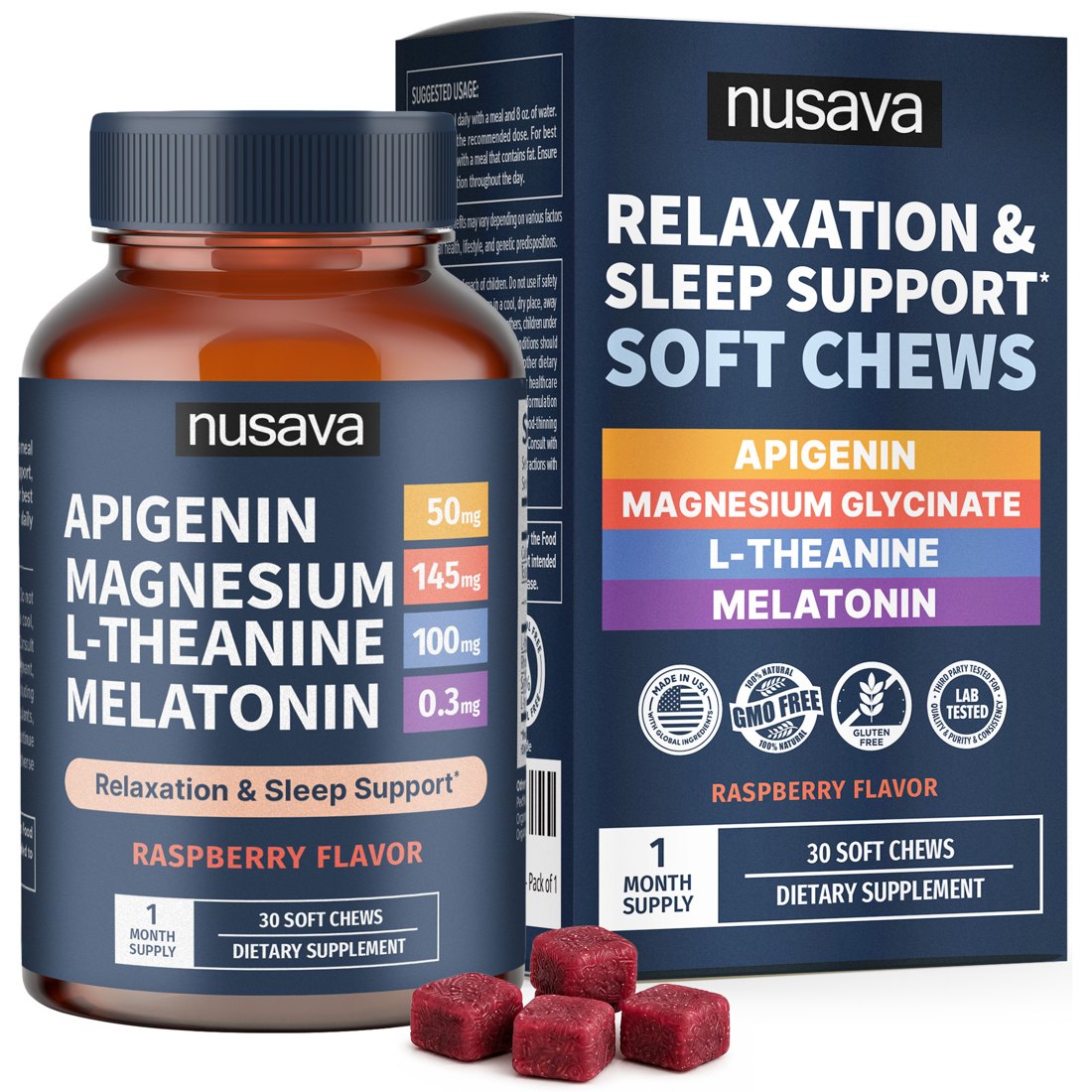
 0.3 mg melatonin
You know without looking. The house is quiet, your partner is breathing slowly, and you’re wide awake, as if someone flipped a switch.
You run through tomorrow: the 9 a.m. call, the permission slip, the email you meant to send. By 3:30 you’re doing the math. If you fall asleep right now, you still get four hours.
You used to fall asleep on planes. What happened?

Stress is only part of it. Keep reading: here’s what changed, and what helps you settle back to sleep.
If your sleep hasn’t changed, you probably don’t need this.
At the kids, at your partner, at the dog. Not who you are, just how tired you are.
You know the word. It just isn’t there when you need it.
By 2 p.m., and then you wonder why you can’t settle that night.
It helps you fall asleep, which was never your problem. It didn’t help with the 2 a.m. wake-up.
It makes you drowsy first. Then, as it wears off, it tends to break up the second half of the night, right around 2 a.m.
Bright screens wake your brain up.
In your 40s, progesterone starts to fall. Its natural by-products work on the brain’s GABA calm system, the same system that helps you stay asleep. Doctors call this stretch perimenopause, and it can start years before your periods change.
That’s why it feels like a switch. You fall asleep fine, and then the thing that used to keep you down in the second half of the night simply isn’t as strong. Add an evening glass of wine, which sedates first and then breaks up the second half of the night, and 2 a.m. gets even harder to sleep through.
Nothing is wrong with you. It’s one of the most common sleep changes for women in their 40s, and almost nobody warns you about it.
You can’t bring progesterone back, and this isn’t hormone therapy. You can support the same calm system from another direction.
Apigenin, the compound that makes chamomile calming, acts on the brain’s GABA calm receptors in lab studies. Magnesium helps the body settle. L-theanine helps a busy head quiet down. And a small, measured amount of melatonin marks the hour without a groggy morning.

Nusava’s night chew: 50 mg apigenin, 145 mg magnesium glycinate, 100 mg L-theanine and 0.3 mg melatonin in one raspberry soft chew. Together they support relaxation as you wind down.
No hormones. Third-party tested, GMO free, gluten free.
| Ingredient | Typical melatonin gummy | Nusava night chew |
|---|---|---|
| Melatonin | 3–10 mg | 0.3 mg |
| Apigenin (from chamomile) | — | 50 mg |
| Magnesium glycinate | — | 145 mg |
| L-theanine | — | 100 mg |
Apigenin was identified in the 1990s as the chamomile compound that binds to the brain’s calm (GABA) receptors in laboratory studies. It’s the reason chamomile has been a bedtime drink for centuries.
Melatonin works best small: researchers at MIT found 0.3 mg worked as well as or better than 3 mg in adults over 50, without lingering into the next day.
Easier to settle in the evening, without the glass of wine.
When you wake, you get back to sleep faster.
The 2 a.m. wake-up stops running the night.
No. It’s apigenin, magnesium, L-theanine and 0.3 mg melatonin.
Ask your doctor first. We include a printable label summary to show them.
The melatonin is 0.3 mg, close to what the body makes, so it’s far less likely to linger than 5 or 10 mg.
Waking at 2 a.m. is one of the most common sleep changes in the 40s. If you’re worried, talk to your doctor; you’re far from alone.
90 nights to decide, or your money back.
Save 20%30 soft chews · one a night · raspberry
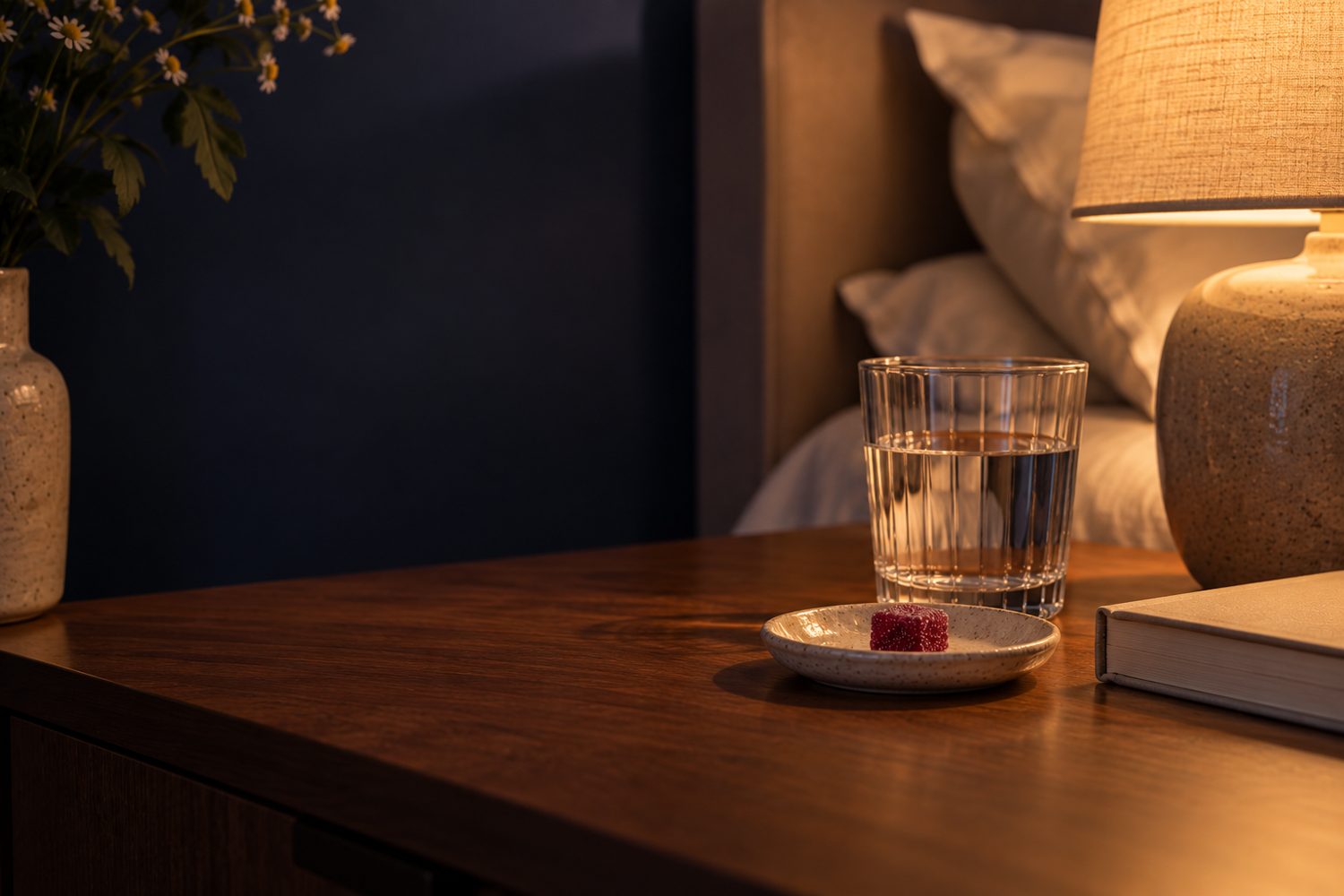
You take the chew while you read. You fall asleep. The next thing you notice is the alarm. 2:12 came and went without you.
Breakfast is calm. The word is there in the meeting. You stop at one coffee.
P.S. Something in your 40s changed how the night holds. That isn’t your fault. The chew gives your evening a calm signal of its own, and you have 90 nights to see if it works for you.