🚚 Free shipping · 90-day money-back guarantee

Changed your program three times? Your muscles may still be running on half a tank.
If you eat meat fewer than four times a week, your training is probably short on one thing. No program, protein target or sleep schedule can fix it.
Stuck at the same weights for months? Check the one variable no program changes.
You’ve changed the program, the protein and the sleep. Here’s the one thing none of them touch, and why lifters who eat less meat feel it most.
 5 g a day
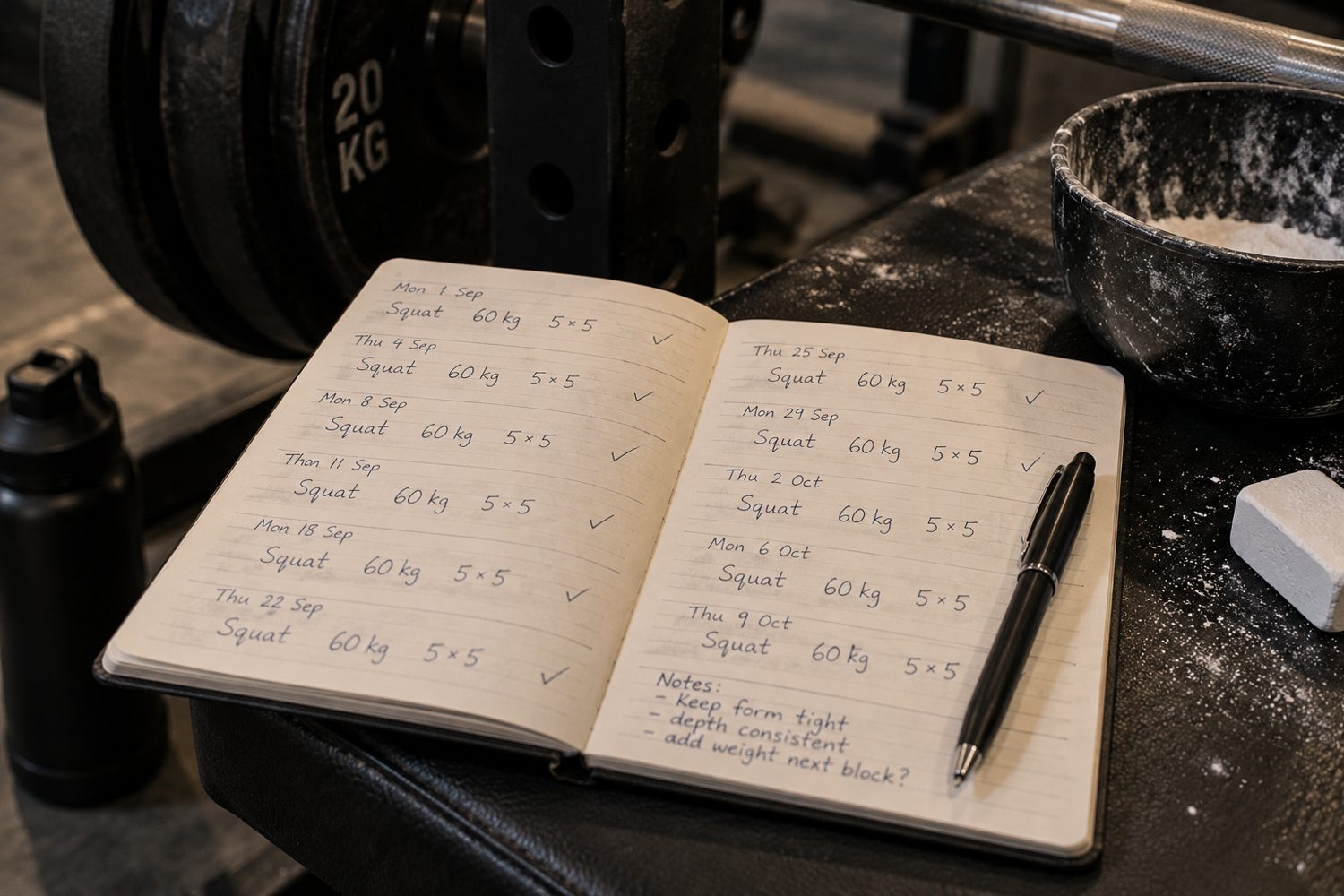
You’ve switched programs twice, pushed protein to 140 g and started going to bed at 10:30. The log doesn’t care.
You scroll back eight weeks: the numbers are identical, down to the last rep. You changed everything you could think of.
Except one thing.
Lifting hard, stalled, and light on meat: that’s the pattern the research points to. Here’s the variable you never changed.
If you eat meat or fish most days, food covers much of it. A daily 5 g still tops the tank up. The gap is just smaller.
With nothing on the bar to show for them.
When the log stops moving, the Thursday session starts to feel optional.
The one you’re about to buy, that will change everything except the tank.
Changes the stimulus. Doesn’t change the fuel.
Building material. Not fuel for a heavy set.
Recovery helps. The tank stays half full.
Creatine fuels short, heavy efforts: a top set, a sprint. Your body makes about half of what it uses. The rest comes from food, almost all of it from meat and fish.
Eat meat twice a week instead of every day, and you start every session with a smaller tank than the lifter next to you. That’s a gap no program can close.
A full tank lets you do a little more work in your heavy sets. One more rep on the top set this week. The next plate a few weeks later.
More work, week after week, is what moves the bar. 5 g a day fills the tank in 3–4 weeks, with no loading week.

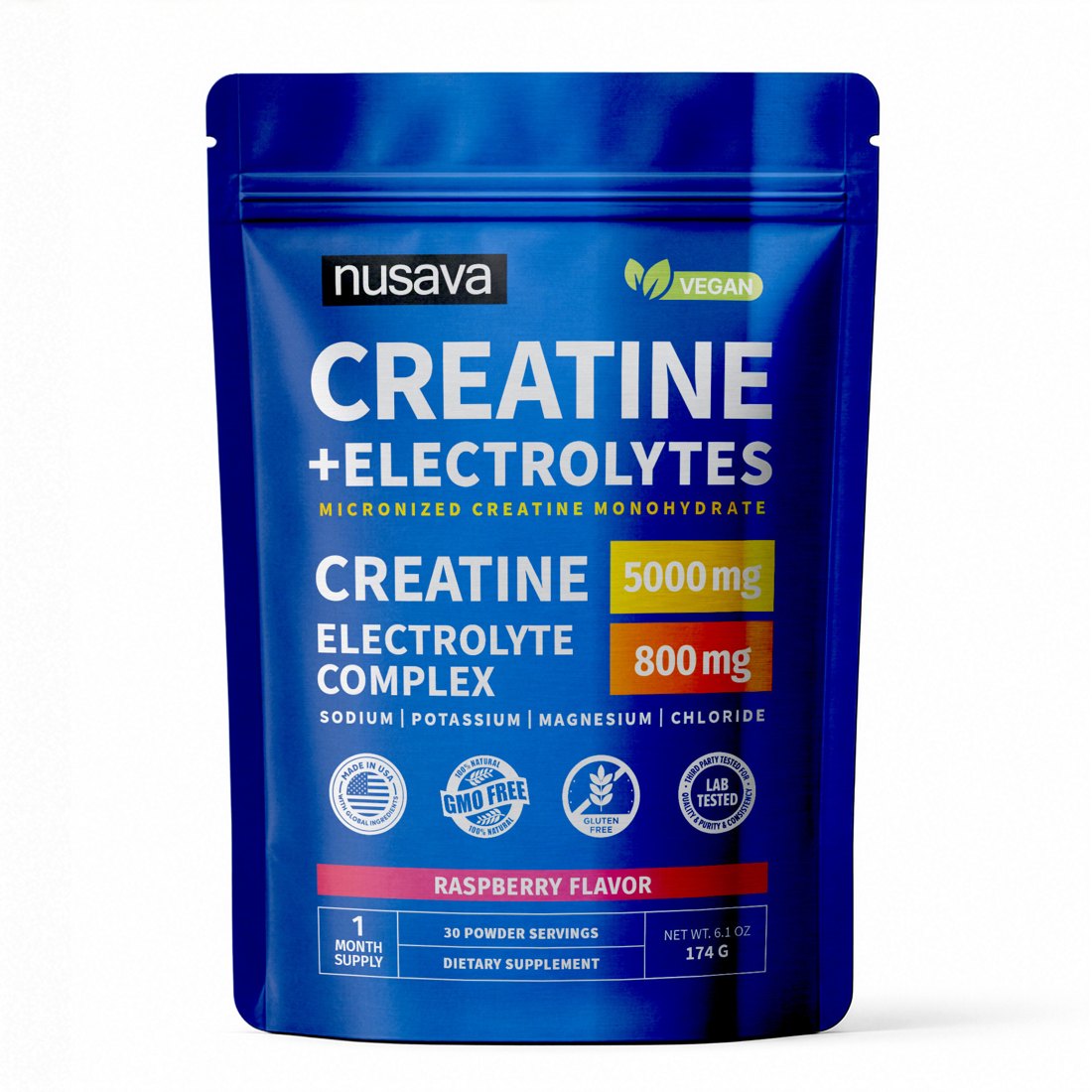
Nusava Creatine + Electrolytes: 5 g creatine monohydrate, the dose used in the research, plus 800 mg electrolytes so it doesn’t taste like plain water. Raspberry, vegan, sugar free. Third-party tested, made in the USA with global ingredients.
| Fix | What it changes | Fills the creatine tank? |
|---|---|---|
| New program | The stimulus | No |
| More protein | Building material | No |
| More sleep | Recovery | No |
| 5 g creatine a day | Fuel for short, heavy efforts | Yes |
In a 2003 study, people who ate little or no meat started with lower muscle creatine, and gained more when they supplemented, including more lean muscle and strength alongside training.
Creatine is among the most studied sports supplements there is, and 5 g a day is the standard research dose.
The scale may go up a little. That’s water inside the muscle, not fat.
The tank is full.
Watch your top set. That’s where it shows first.
Creatine pulls water into the muscle itself. If the scale moves early, that’s water in the muscle, not fat.
5 g a day is the most studied creatine dose in healthy adults. If you have a kidney condition or take medication, check with your doctor first.
One 2009 study in rugby players saw a rise in a hormone linked to hair loss. It didn’t measure hair loss, and it hasn’t been repeated. If it worries you, talk to your doctor.
No. 5 g a day fills the tank in 3–4 weeks.
No. It fuels any short, heavy effort, and it matters most for lifters who eat little meat.
Save 20%30 servings · one scoop a day · raspberry · vegan
One more rep on the top set. Then, a few weeks later, the next plate. The program didn’t change. The tank did.
P.S. If you eat meat fewer than four times a week, you’ve likely been training on a half-empty tank. 5 g a day fills it in 3–4 weeks. You have 90 days to see it in your log.